
 By Admin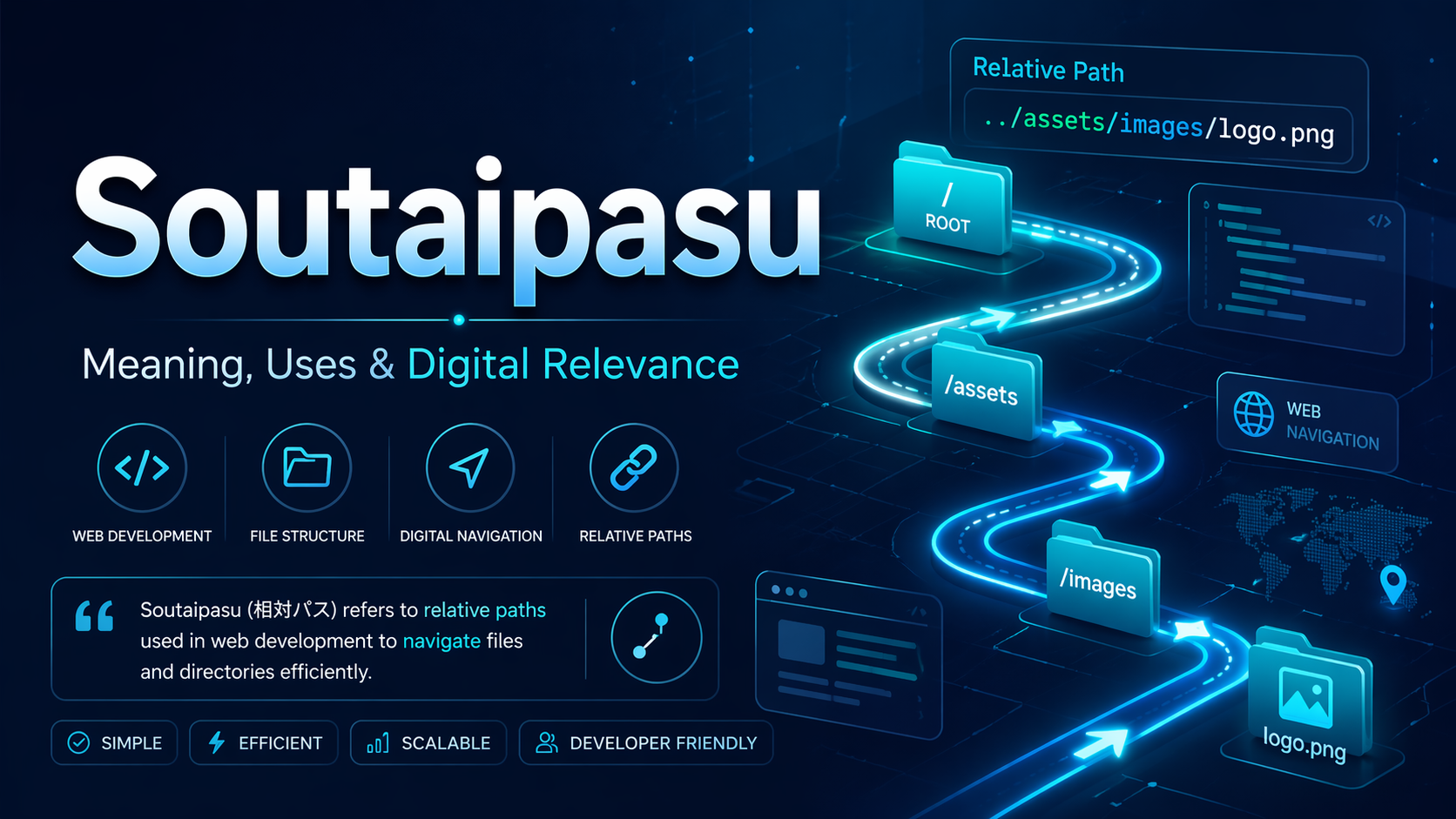
Some words just… appear out of nowhere. You see them online, maybe in a blog, maybe in a random SEO post—and suddenly you’re curious.
That’s exactly what happens with soutaipasu.
It sounds technical. Or maybe Japanese. Or maybe something completely made up… and honestly, it’s a bit of all three.
Let’s break it down properly—but not in a boring, textbook way.
What is Soutaipasu?
At its core, soutaipasu doesn’t have one fixed meaning. And yeah, that’s part of the confusion.
But most commonly, it refers to:
- A relative path in web development
- A Japanese-inspired term combining “relative” and “path”
- A modern digital keyword used in SEO and branding
In simple words…
Soutaipasu = a way to describe location based on where you currently are.
For example:
- Instead of giving a full address → you give directions from your current place
- Instead of full file path → you use a relative path
That’s the idea.
And interestingly, it’s not even a traditional dictionary word. It’s more like an internet-born concept.
Where Did Soutaipasu Come From?
This is where things get a bit interesting… and slightly unclear.
Most sources suggest that:
- It comes from Japanese linguistic structure
- “Sōtai” means relative
- “Pasu” comes from English word path/pass
So combined, it loosely means:
👉 “Relative path” or “relative direction”
But here’s the twist…
It’s not widely used in formal Japanese either. It’s more like a hybrid internet term that evolved over time.
How Soutaipasu Works (Simple Explanation)
Let’s make this super easy.
Imagine two ways to explain a location:
Absolute Path (Full Address)
- “Go to House 12, Street 5, City Center”
Soutaipasu (Relative Path)
- “From where you are, walk straight and take the second left”
See the difference?
That second one depends on your current position.
That’s exactly what soutaipasu does in coding and digital systems.
Soutaipasu in Web Development
This is where the term is actually useful.
Developers use soutaipasu (relative paths) to connect files like:
- Images
- CSS files
- JavaScript files
Common Examples
./image.png→ same folder../style.css→ one folder upassets/js/app.js→ inside a subfolder
Instead of writing long system paths, developers use short, flexible paths.
And honestly… it saves a lot of headaches.
Why Soutaipasu is Important
It might sound small—but it solves real problems.
1. Flexibility
You can move your project anywhere, and links still work.
2. Team Collaboration
Different developers, different systems… no broken paths.
3. Cleaner Code
Shorter, easier-to-read file references.
4. Fewer Errors
Less chance of broken links or missing files.
Soutaipasu vs Absolute Path (Quick Comparison)
| Feature | Soutaipasu (Relative Path) | Absolute Path |
|---|---|---|
| Starting Point | Current location | Root directory |
| Length | Short | Long |
| Flexibility | High | Low |
| Portability | Easy | Difficult |
| Use Case | Web projects | System-level access |
Short version?
👉 Developers prefer soutaipasu most of the time.
Soutaipasu Beyond Coding
Now here’s where things get… a little unexpected.
Soutaipasu isn’t just technical anymore.
It’s also used as:
- A brand name
- A username or online identity
- A creative concept in digital communities
Why?
Because it’s:
- Unique
- Memorable
- Not already overused
Perfect for SEO experiments too—low competition keyword.
Soutaipasu in SEO and Blogging
Let’s be real…
A big reason you’re seeing this keyword is SEO.
Many bloggers are using soutaipasu because:
- It has low competition
- High curiosity factor
- Easy to rank (for now)
And since people don’t know its meaning, they search it more.
That’s how it starts trending.
Creative Uses of Soutaipasu
Some people even stretch its meaning further.
It’s sometimes used to describe:
- Direction-based thinking
- Context-aware systems
- Even storytelling metaphors
And in rare cases…
It’s linked to concepts like balance and flow in creative or lifestyle discussions.
Not official, but still interesting.
Real-Life Examples of Soutaipasu
Let’s connect this with everyday life:
- Google Maps “turn left from your current location”
- Website linking images using folders
- Game navigation systems
- File management in your laptop
All of these rely on the same concept.
Common Mistakes People Make
Yeah… beginners mess this up a lot.
Here are common issues:
- Using wrong folder level (
../confusion) - Mixing absolute and relative paths
- Forgetting file structure changes
- Incorrect file names or extensions
Small mistakes… big problems.
Benefits of Learning Soutaipasu
Once you understand it, things get easier.
- Faster coding workflow
- Cleaner project structure
- Better debugging
- Improved teamwork
And honestly…
You feel more confident navigating files.
Future of Soutaipasu
Will it become a real dictionary word?
Maybe. Maybe not.
But one thing is clear:
- It’s growing in digital usage
- It’s gaining attention in SEO
- It’s already useful in development
And words like this often evolve over time.
FAQs About Soutaipasu
Is soutaipasu a real word?
Not officially. It’s more of an internet-driven term.
What does soutaipasu mean in simple terms?
It means relative path or direction based on current position.
Is soutaipasu important for beginners?
Yes—especially if you’re learning web development.
Why is soutaipasu trending?
Because it’s unique and people are curious about it.
Conclusion
Soutaipasu is one of those rare words that sit between meaning and mystery.
It’s technical… but also creative.
It’s useful… but also experimental.
And honestly, that’s why it’s gaining attention.
Whether you see it as:
- A coding concept
- A branding keyword
- Or just an internet trend
One thing is clear…
👉 Soutaipasu is a small idea with surprisingly big impact.